Choosing the Right Industrial Ladder for Ahmedabad Factories and Warehouses

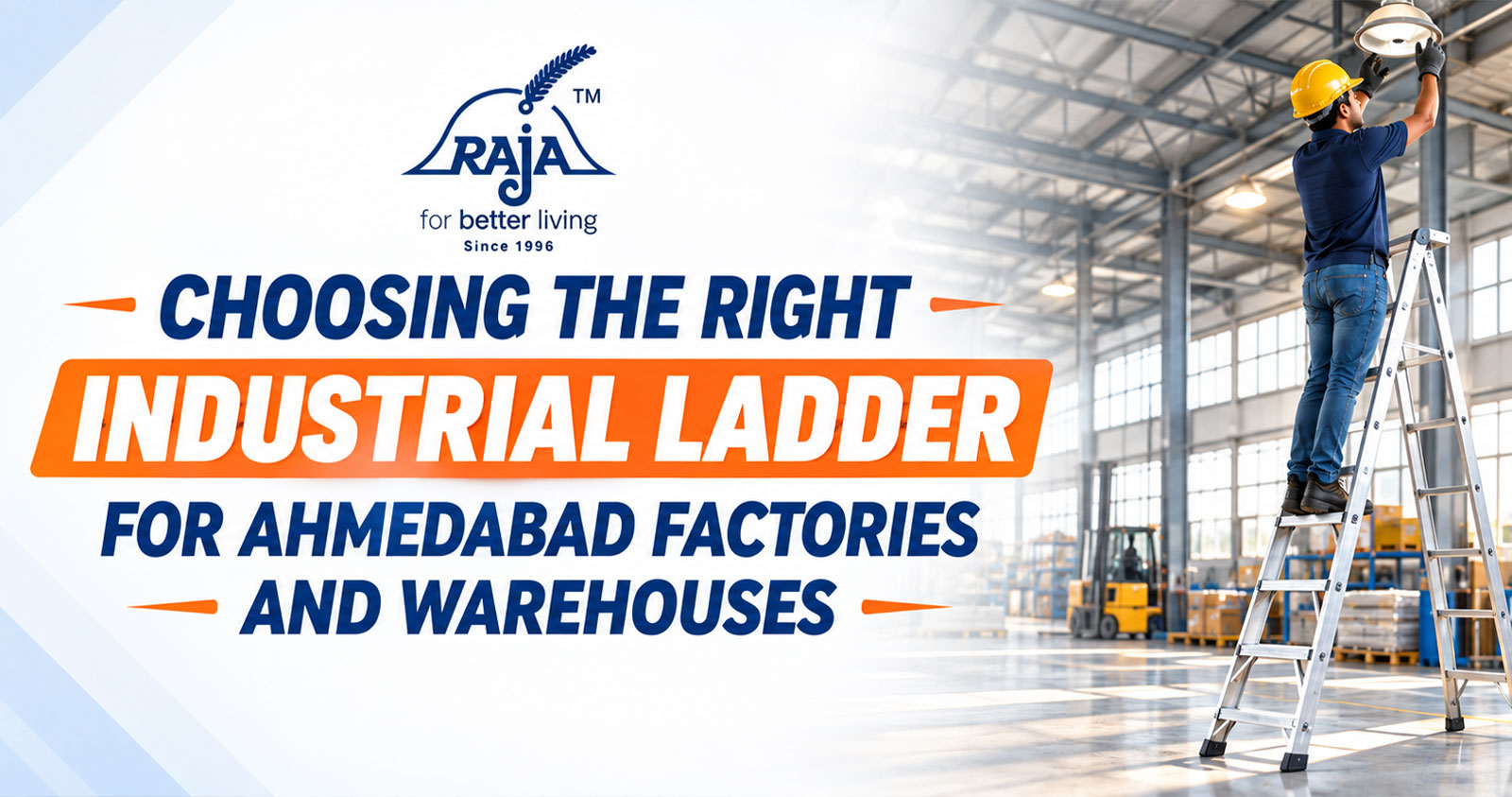
A ladder is one of the cheapest pieces of equipment on a factory floor, and one of the most dangerous when the wrong one gets used for the job. Most industrial ladder accidents don’t come from a bad ladder…they come from the right ladder chosen for the wrong task, or a good ladder pushed past what it was built to carry.
Here’s what actually decides whether an industrial ladder is right for an Ahmedabad factory or warehouse.
Load Capacity Comes First
Every industrial ladder carries a duty rating, and that number should drive the buying decision before style, height, or price even come into it. A ladder rated for light household use has no place under a worker carrying tools, and a ladder rated for one person has no business being climbed by two.
The rating on the ladder needs to match the heaviest realistic load it will see, not the average one. A maintenance technician carrying a toolbox and spare parts weighs more than they do standing empty-handed, and the ladder has to be chosen for that heavier number.
Platform, Straight, and Extension: Matching Ladder Type to the Task
A straight ladder does one thing well: getting a single worker up to a fixed height quickly, with no moving parts to set up. It’s the right call for short, occasional jobs like changing a light fitting or checking a duct.
A platform ladder trades some of that simplicity for a flat, stable standing surface. Anyone working at height for more than a few minutes, such as during a wiring job or an inspection, stays steadier and works faster on a platform than balanced on a rung.
An extension ladder earns its place wherever the reach goes beyond what a fixed-height ladder can manage safely, such as external wall access or high mezzanine storage. Choosing between the three usually comes down to how long the job takes and how high it goes, more than personal preference.
Where Ahmedabad’s Factory Floors Add Extra Demands
A factory floor in Ahmedabad puts more strain on equipment than a typical office job would. Long stretches of heat soften rubber feet and grips faster than cooler climates do, and dust from nearby roads or production lines works its way into hinges and locking mechanisms over time.
Aluminium ladders hold up better under this combination than painted steel does. They don’t corrode the way steel does once the paint chips, and they stay cool enough to handle even after sitting in direct sun near a loading bay.
Uneven or sloped factory floors add one more variable, which is why stabiliser feet and wide, non-slip bases matter more on an Indian shop floor than they do in a controlled warehouse environment.
Maintenance and Inspection That Keep a Ladder Safe Over Years
A ladder doesn’t fail suddenly. It fails after months of small warning signs that nobody logged: a slightly loose rivet, a hinge that binds instead of folding smoothly, a rubber foot worn down to bare metal.
A short visual check before each use catches most of this early. Anyone using the ladder should look for cracked or bent rungs, worn feet, and locking mechanisms that don’t click fully into place. A more thorough inspection on a fixed schedule, logged and signed off, is what actually protects a factory when an incident does get reviewed.
Also Read: Aluminium Ladder vs Steel Ladder: Which One Is Best in India?
Conclusion
The right industrial ladder isn’t the tallest one or the cheapest one. It’s the one whose duty rating, type, and build actually match the job, the worker, and the floor it stands on.
For an Ahmedabad factory, that usually means an aluminium ladder rated for the heaviest realistic load, matched to the task at hand, and checked often enough that small wear gets caught before it becomes a hazard.
Contact Raja Interiors about industrial ladders built and rated for Ahmedabad’s factory conditions.